The Island Where Women Over 45 Stay Slim
Scientists spent a decade studying the Greek island of Ikaria — where obesity is rare and many women in their 70s remain slim and energetic. Here is what their published research suggests about weight after 45.

You cut the bread, the wine, the late-night snacks. You walk most mornings. And still the scale won't move — or, worse, it slowly creeps up anyway. If that has been the story of the last few years, here is something worth knowing: it may not be your willpower. It may be your biology.
In a hurry? Take the 60-second quiz →
There is a small island in the northeastern Aegean Sea where researchers keep arriving with clipboards and questions — and keep being surprised by the same thing.
Ikaria. Population around 8,000. Famous for its wine, its festivals, and one inconvenient statistic: residents tend not to gain weight the way much of the Western world does. Published research has recorded obesity and chronic-disease rates on the island well below those in the United States, and a notable share of women there stay slim and active well into older age [1].
The question researchers kept asking: why?
The easy answer is the Mediterranean diet — and the diet clearly matters. But several investigators have noted that diet alone does not fully explain the pattern, and have pointed toward differences in how the body stores and releases fat with age.

Why Weight Gets Harder to Lose After 45
Many women hear the same explanation in their late 40s: your metabolism is slowing down, so eat less and move more. There is truth to that — but research on metabolic aging points to a more specific factor that is often overlooked: a class of lipid compounds called ceramides.
What the research describes
Ceramides are fatty molecules that tend to accumulate in the body with age, and studies have linked higher levels to insulin resistance and difficulty mobilising stored fat [2]. In other words, part of why fat loss gets harder may be biochemical rather than a matter of willpower alone.
This is an area of active scientific study rather than settled fact, and no supplement is a substitute for a balanced diet, movement, and medical care. But it reframes a frustration many women know well: doing the "right" things and seeing little change.
Does this sound familiar?
- Stubborn fat around your belly and midsection that won't move — no matter how carefully you eat
- Afternoon energy crashes and cravings for sugar or carbs
- Bloating, puffiness, or digestion that feels "off" more often than not
- Doing all the "right" things — and seeing almost nothing on the scale
If you recognised yourself in more than one of these, the 60-second quiz below points to the approach that best fits your pattern.
→ Researchers explain the Ikaria morning ritual in this free presentation
A Morning Ritual, Hidden in Plain Sight
On Ikaria, certain plant-based morning drinks have been part of daily life for generations — prepared as routinely as coffee. Interest in the island's traditional botanicals is part of what prompted Western formulators to look more closely at Mediterranean dietary patterns.
These communities weren't slim because of luck. Their everyday habits — diet, movement, and traditional botanicals — appear to work together. Composite of published Mediterranean-longevity research · see references
Bringing the Idea to the West
A U.S. nutraceutical company drew on this research to develop a powdered morning blend of botanicals, sold as Ikaria Lean Belly Juice. It is mixed into water or a smoothie each morning. It is a dietary supplement intended to complement a healthy lifestyle — not a medicine, and not a replacement for diet and exercise.
What the maker states
- A botanical blend designed to support a healthy metabolism and daily energy
- No stimulants, no synthetic compounds, no prescription ingredients
- Manufactured in the USA in an FDA-registered, GMP-certified facility with third-party testing
- Backed by a 180-day money-back guarantee
These are the manufacturer's statements. They have not been evaluated by the FDA and are not intended to diagnose, treat, cure, or prevent any disease.
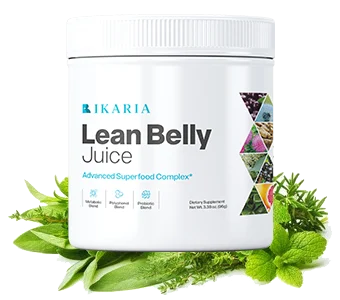
The formula's botanical blend includes Fucoxanthin (a compound from seaweed), EGCG from green tea, Milk Thistle (Silymarin), Panax Ginseng, Citrus Pectin, Resveratrol and Dandelion (Taraxacum), combined in a powdered drink mix taken with water. As with any dietary supplement, it is intended to be used alongside — not instead of — a balanced, reduced-calorie diet and regular physical activity.
Questions Readers Usually Ask
On its own, no supplement replaces food, movement, and sleep, and anyone who tells you otherwise is selling you something. What a formula like this is designed to do is support the metabolic side of the picture while you handle the basics. If you're hoping to skip the basics entirely, this isn't for you — and the manufacturer says as much.
Realistically, weeks rather than days. Metabolic changes are gradual, and anything promising dramatic results in a week is worth being suspicious of. The 180-day guarantee exists precisely because the honest answer is "give it real time" — which is only fair if you can get your money back when it isn't for you.
Reasonable. That's the whole point of the 180-day money-back guarantee — it moves the risk off you and onto the manufacturer. You can try it for months and still request a refund. If a company weren't reasonably confident, that offer would be financial suicide.
It's a botanical powder — no stimulants, no synthetic compounds, no prescription ingredients — made in an FDA-registered, GMP-certified US facility with third-party testing. That said: if you're pregnant, breastfeeding, on medication, or under medical care, talk to your doctor first. That isn't boilerplate; it's the sensible thing to do with any supplement.
A dietary supplement is not a substitute for a balanced diet and regular exercise. Individual results vary and no specific result is guaranteed.
One Pattern — But Not the Only One
Here is the part that often gets lost. The ceramide research above describes one pattern: stubborn fat that settles around the midsection and refuses to move. For a lot of women over 45, that is exactly the problem.
But it isn't the only one. Researchers looking at weight in midlife keep landing on a handful of distinct underlying drivers, and they don't all respond to the same approach:
- The midsection pattern — fat concentrated around the belly that stays put no matter how carefully you eat. This is the ceramide / fat-mobilisation angle described above.
- The energy pattern — a metabolism that feels like it downshifted. Afternoon crashes, sugar cravings, a body that seems to burn less than it used to.
- The gut pattern — bloating, puffiness, digestion that feels "off." A growing body of research links gut bacteria to appetite, cravings and weight regulation.
Two women can follow the identical diet and get completely different results — because they are working against different problems. That is why generic advice keeps failing capable, disciplined people: it isn't aimed at whatever is actually driving their weight.
The short quiz below is simply a way to work out which of these patterns most resembles yours, so the approach you take next is at least pointed in the right direction.
Which Pattern Fits You?
Not every body struggles with weight for the same reason. Answer three quick questions to see which of the three patterns best matches what you're dealing with — and what tends to suit it.
Want your results emailed to you?
We'll send a short summary of your result plus what tends to actually work for your type.
Please enter a valid email address.
No spam. Unsubscribe anytime.
✓ Sent — check your inbox in a few minutes.
In the meantime, watch the free presentation for your type →
What This Means For You
If you are over 45 and have been trying honestly to lose weight without much to show for it, the research is a reminder that the problem may be partly biochemical — not a personal failing. A dietary supplement won't replace good food, movement, and medical guidance, but for some people it can be one supportive piece of the routine.
The free video presentation below explains the background, the specific botanicals, and what to expect. The 180-day guarantee means you can try it and request a refund if it isn't for you.
Prefer to skip the quiz? Watch the standard presentation.
▶ Watch the Free Video NowUse alongside a calorie-controlled diet and regular exercise. Not a substitute for diet or exercise. Results vary; no specific result is guaranteed. These statements have not been evaluated by the FDA.
References & Further Reading
- Panagiotakos DB et al. Studies on the diet and lifestyle of long-lived residents of Ikaria, Greece. PubMed.
- Research on ceramides, insulin resistance and metabolic aging. PubMed.
- Mediterranean dietary pattern and body weight / metabolic health. PubMed.
These references describe general research on Mediterranean longevity and metabolic biology. They do not represent clinical trials of the specific product and are provided as background.
Health disclaimer. This product is a dietary supplement, not a weight-loss drug. It is intended to be used in conjunction with a healthy, calorie-controlled diet and regular exercise — it is not a substitute for either, and results depend on diet and physical activity. No specific weight-loss result is guaranteed, and individual results vary. If you are pregnant, breastfeeding, taking any medications, or under medical supervision, please consult a doctor or qualified healthcare professional before use. This product is not intended to diagnose, treat, cure, or prevent any disease.
Editorial & affiliate disclosure. This is an advertorial (paid promotional content) produced on behalf of Ikaria Lean Belly Juice. The publisher may receive compensation if you purchase through links on this page. Persons named in this article ("Eleanor Stavros") and any researcher composites are illustrative and used to present published research in narrative form; they are not real individuals endorsing the product. Results may vary. These statements have not been evaluated by the Food and Drug Administration.